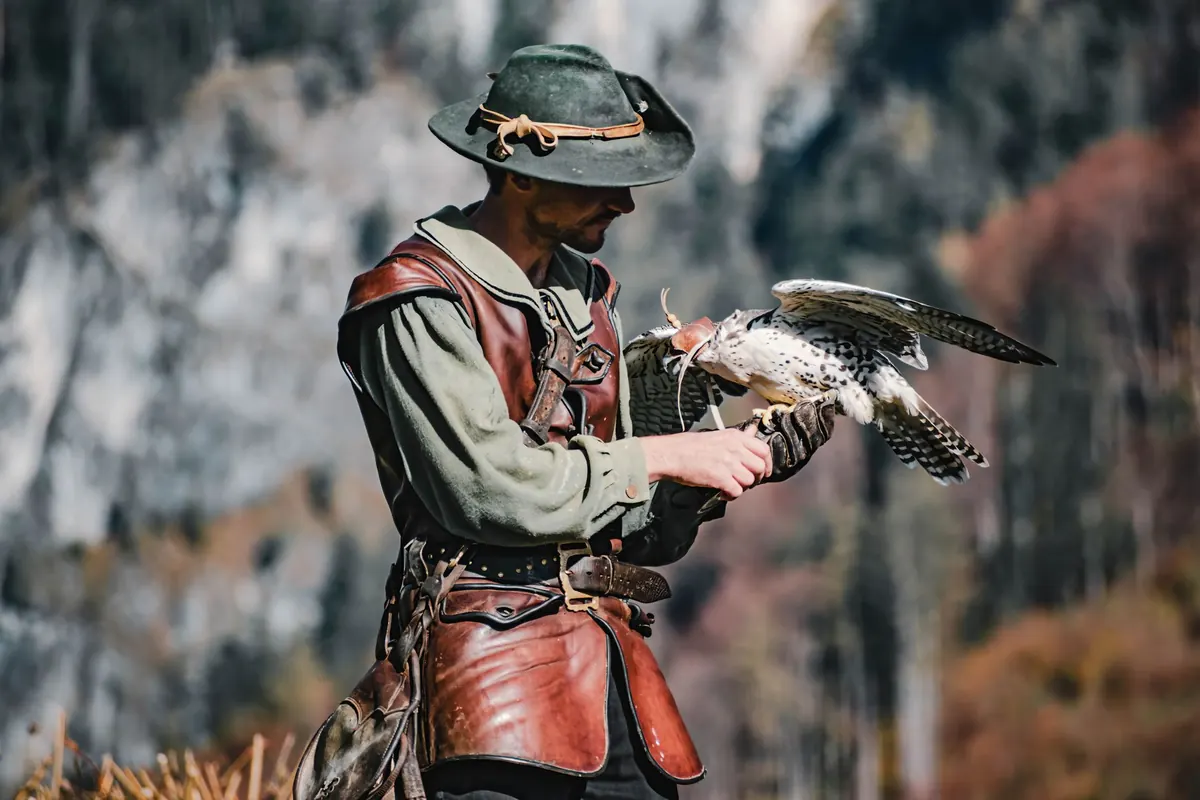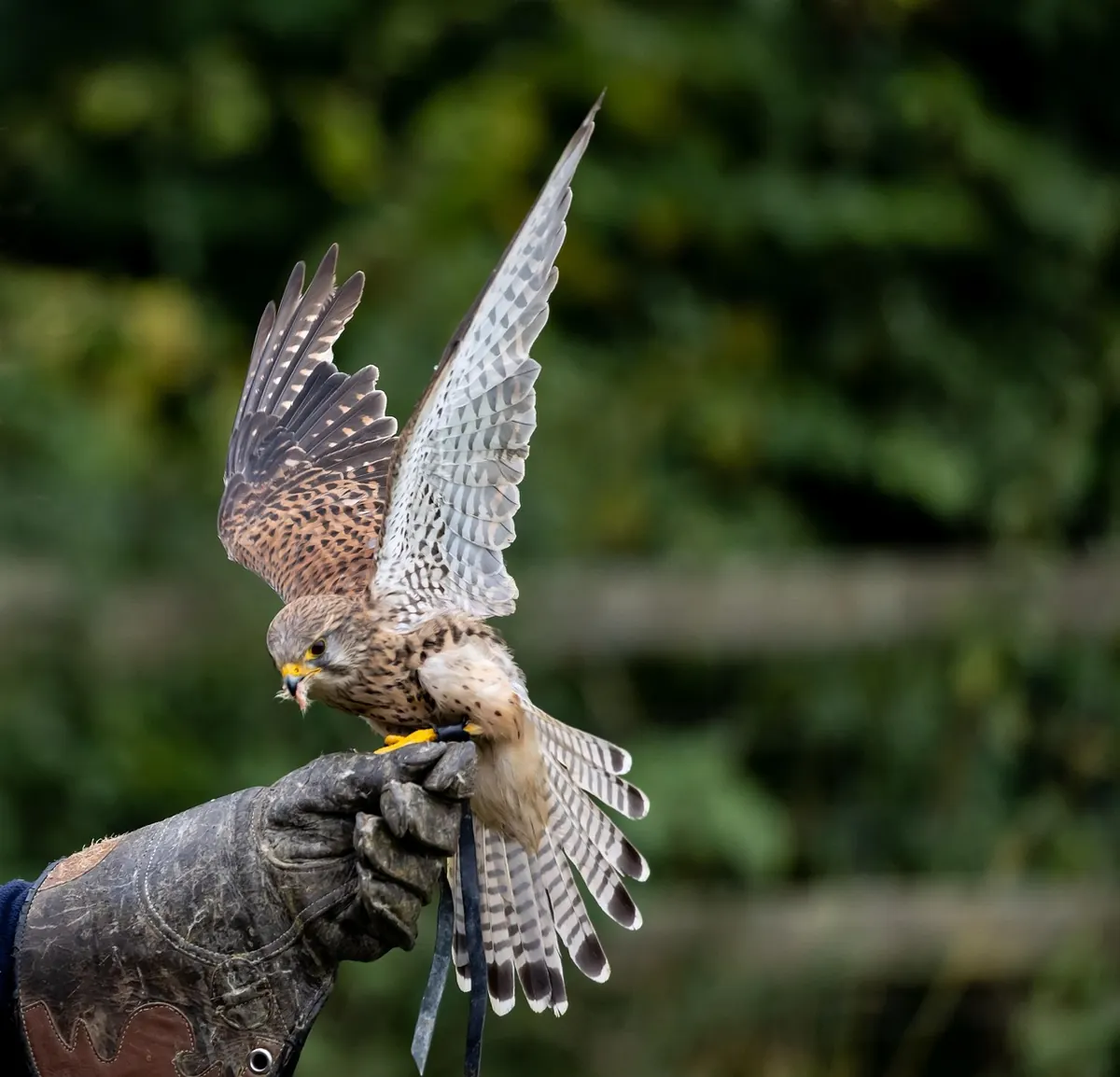
The first time a Harris's hawk lands on your fist, everything you were told about the bird goes quiet and you notice the glove instead: the weight of the foot, the grip tightening, the odd, precise pressure of talons finding their place. A falconry glove is not a formality and not a fashion item. It is the one piece of kit that decides whether your first season is spent learning to fly a hawk or nursing a punctured hand.
Most beginners ask which glove to buy. The better question is which glove suits the bird in front of you, your hand and your budget, in that order. Here is how the main options compare.
What a falconry glove actually does
A glove does three jobs. It gives the bird a stable, familiar surface to stand on. It protects your hand and forearm from talons. And it keeps you confident enough to handle the bird properly instead of flinching.
That third job is underrated. A handler who is braced for pain grips awkwardly, moves too quickly and teaches the hawk bad habits that take months to undo. Buy a glove you trust and your handling improves immediately.
Two conventions are worth knowing from the start. The glove is worn on the left hand by most falconers, leaving the right hand free for the leash, the swivel and the tidbits. And no glove makes you invulnerable. It is a barrier, not armour, and it works alongside sound technique rather than replacing it.
Materials: what each leather brings
Almost every beginner glove is leather, and the difference between hides matters far more than the label stitched inside.
- Cowhide — the workhorse. Thick, hard-wearing and relatively inexpensive, though often stiff when new. Ideal for a first gauntlet that will take a beating. It softens with use, but expect a clumsy week or two.
- Goatskin — supple from the outset, with a fine grain that gives good feel. Plenty durable for medium birds, though it wears faster than cowhide where talons land again and again.
- Deerskin — the traditional choice. Soft, flexible and stronger than it looks, comfortable on the first wear. It costs more, and a well-kept one lasts years.
- Kangaroo — thin, light and remarkably strong for its weight, which suits handlers who want close contact and control. Expensive, and the thinness means less padding.
- Buffalo — heavyweight and tough, built for large birds and hard use. It will also tire your arm on a long day.
- Synthetic gloves — cheap, easy to wipe clean and fine for a small owl or a few minutes of handling. Many synthetic surfaces are slippery or prone to snagging, so treat them as a stopgap.
Whatever the hide, look at the thumb and the finger ends, because that is where talons concentrate. Extra leather or a reinforced thumb there is worth more than a fancy finish elsewhere.
Cuff length and the birds it suits
The cuff decides how far up your arm a bird can travel, and getting it wrong is the most common beginner mistake.
Short cuff
A wrist-length glove covers the hand and stops there. It suits kestrels, merlins, small owls and brief handling of small birds. It is light, cheap and easy to carry, but a hawk that steps up your arm will find skin within seconds. Do not use one for a bird that will be flown regularly from the fist.
Gauntlet
The standard falconry glove, with a cuff reaching the mid-forearm or the elbow. This is the sensible starting point for a Harris's hawk, a red-tailed hawk or a common buzzard — the birds most beginners actually fly. Buy one with a cuff that stands slightly away from your arm rather than clinging to it, so a talon cannot slip between leather and sleeve.
Long gauntlet
Past the elbow and sometimes towards the shoulder, usually in heavier leather or double thickness. These suit large falcons, goshawks, eagles and any bird with long legs and a wide grip. They are warm, heavy and expensive, and most beginners do not need one. If you are heading in that direction, borrow before you buy.
Getting the fit right
A glove that is nearly right is not right. Too loose and a talon can slide between leather and skin; too tight and your hand goes numb, which is dangerous as well as unpleasant.
- Measure across your palm at the widest point, just below the knuckles, and from the crease at your wrist to the tip of your middle finger. Measure your dominant hand too, even though the glove goes on the other one — most people are surprised by the difference.
- Use the maker's size chart where one exists. If you fall between sizes, choose the larger glove for a heavy bird and the smaller for a small one, then check the cuff clearance.
- Try it on and flex your fingers hard. You should be able to close your hand without the leather pulling across the back, and the thumb should sit without twisting.
- Wear it for ten minutes in the shop or at the meet. Check for pressure at the wrist, pinching across the palm and any seam that digs in.
- Allow for a break-in period if you choose thick cowhide. New leather will give slightly, but it will not stretch a whole size.
Safety points beginners tend to miss
- Worn tips are the weak point. Check the thumb and finger ends regularly. A glove that has gone thin at the tip offers little protection.
- Split seams catch talons. Repair or replace leather that has opened up, especially at the thumb.
- Accidents usually happen during transfers. Moving a bird between fists, a perch or a transport box is when feet move fastest. Your glove is not your only defence — your timing is.
- Keep your glove away from your face. Handling a bird close to your head is a habit worth never forming.
- Get proper instruction. Spend time with an experienced falconer before flying a bird of prey, and check current licensing requirements for the species you intend to keep.
- Keep it clean. Leather cannot be washed like fabric, so wipe droppings off with a damp cloth, dry it away from direct heat and wash your hands after handling.
Buying your first glove
If you are starting with a Harris's hawk or a similar medium bird, a mid-range deerskin or goatskin gauntlet with a reinforced thumb is the sweet spot: comfortable enough to wear for hours, protective enough for a confident grip, and not so costly that you wince when it gets marked. If money is tight, a cowhide gauntlet is a perfectly respectable first glove — it will simply take longer to feel like a second skin.
Ask to handle several pairs at a club meet or falconry centre before committing. Note which one you forget you are wearing, because that is usually the one that fits. And if a club member offers to lend you a spare glove for your first few lessons, take it: a season of handling real birds will tell you more about your needs than any size chart.
Photo: leo2014 / Pixabay