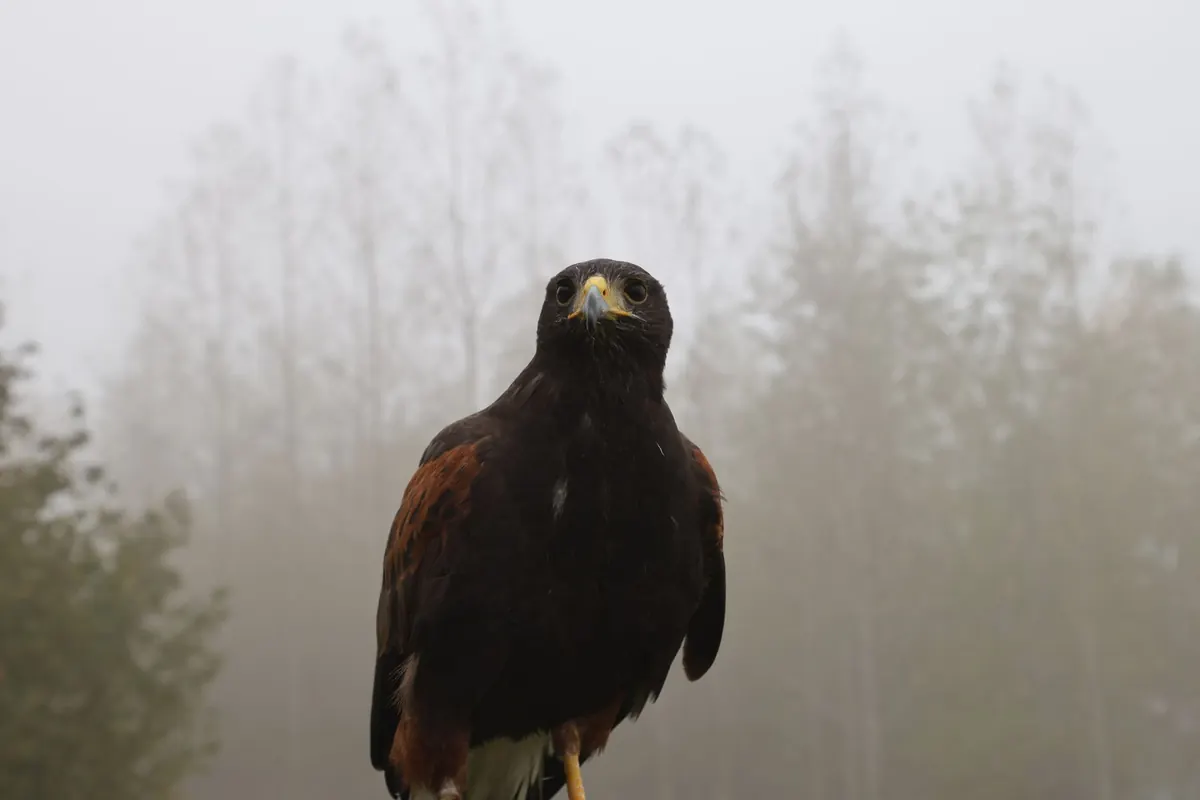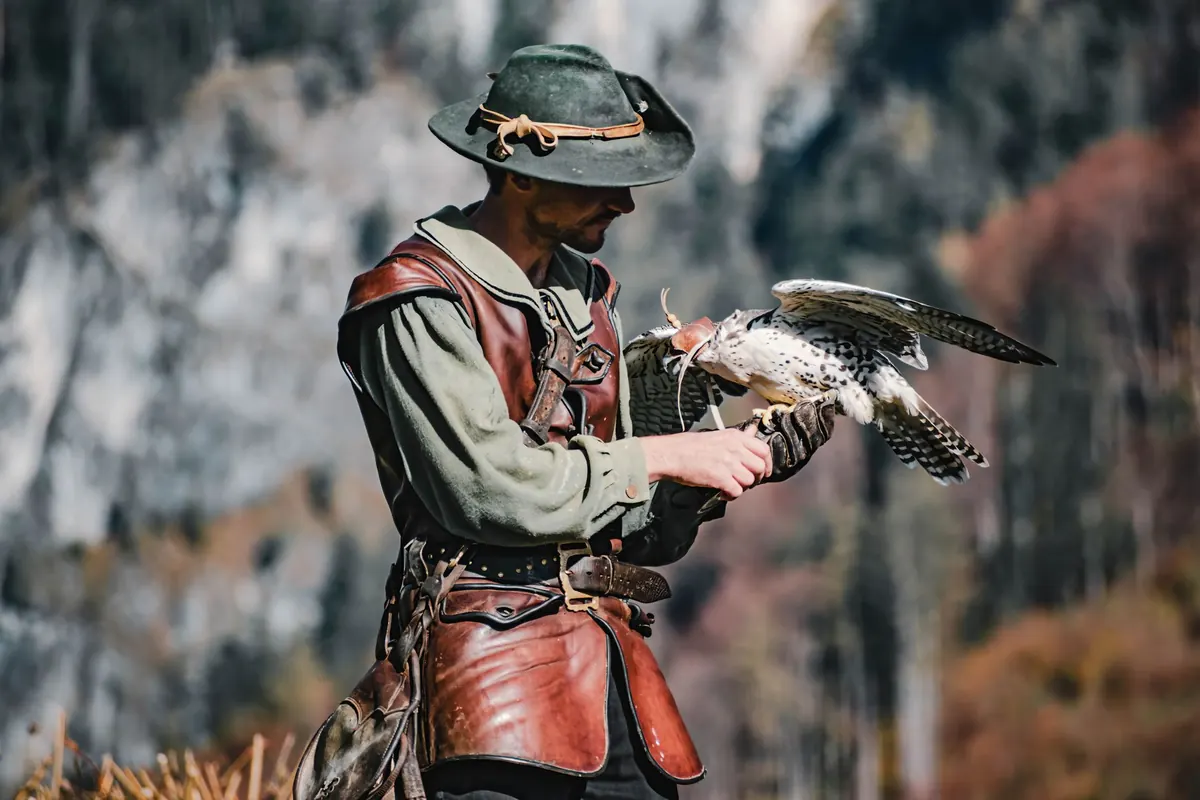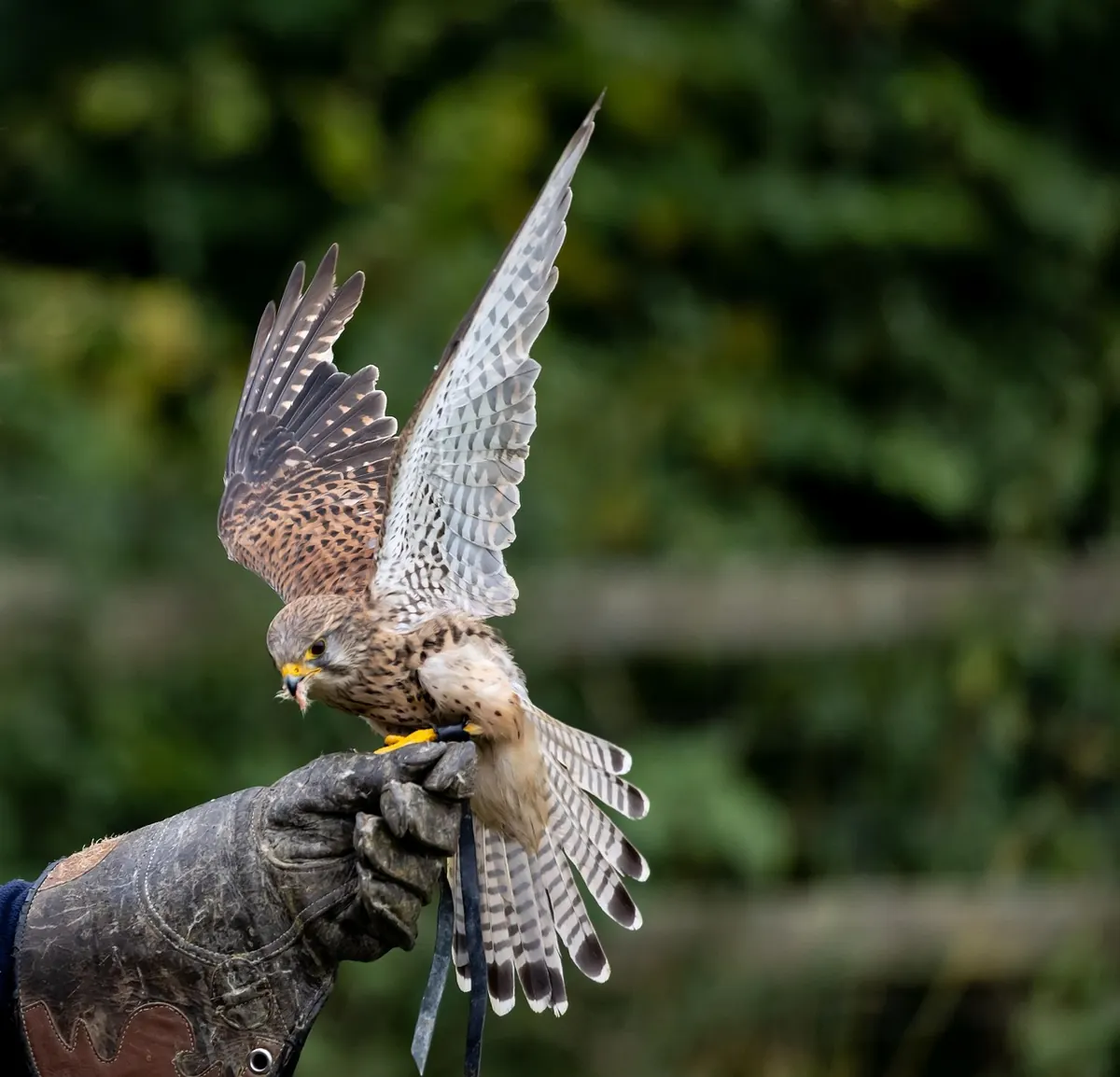
Harris's hawks have a reputation as the most forgiving bird of prey to free-fly, and it is largely deserved. They are sociable, tolerant of handlers who fumble, and naturally inclined to stay near the group. None of that makes recall automatic. A hawk that returns because it is hungry is not the same as a hawk that returns because returning works, and the gap between those two birds is where most losses happen.
Recall is built in small steps, each one solid before you add the next. Work through the sequence below at the bird's pace, not the calendar's.
Before you start: weight, kit and the call
Everything in recall training rests on flying weight. The bird should be keen enough to want the food in your glove, but not so light that it is weakened. Weigh it at the same time each day, before feeding, and keep a written record. You are looking for a working range rather than one magic number, and that range shifts with weather and season.
A hawk that is too heavy will sit in a tree and watch you, apparently deaf. A hawk that is too light will fly at you before you have called, scream through the day, and snatch at the glove — keen, but working out of desperation rather than training. Both birds free-fly badly. Recording the weight at which your bird responds well, in cold weather and in warm, is the single most useful piece of data you will gather in your first season.
The kit that matters
- An accurate scale — to the gram, checked against a known weight. Judging keenness by eye does not work.
- A creance — a light line that lets you rehearse recall at a distance without risking a flight you cannot finish.
- Telemetry — fitted, tested and understood before the first free flight, not on the day you need it.
- A lure — a padded lure on a line, used to bring a hawk down from a tree and to build drive.
- Reward food you can produce instantly — small, high-value pieces of chopped chick or quail, in a pocket you can open one-handed.
- A glove that fits, and a leash and swivel in good order.
Choose the call and never change it
Pick one call — a whistle carries further than a voice and does not sound like conversation — and use it every single time you feed, starting the day the bird arrives. The call is not a request. It is a signal that means food is available right now. Say it once. Do not repeat it while the bird is deciding, and never call a hawk you cannot reward. A call used carelessly is a call the bird learns to ignore.
Step 1: Short recalls on the creance
Begin indoors or in a weathering area with the hawk on a light line and a leash. Put the bird on a perch, step back a pace, call once, and hold out the glove with a small piece of food visible. The bird jumps, eats, and is returned to the perch. Repeat five or six times, then stop. Short, frequent sessions beat long ones every time.
Progress in stages, moving on only when the current distance has become boring for the bird:
- Glove to perch, one pace away.
- Three paces, then five, then ten.
- From a perch to the ground and back up to the glove.
- Recall past a distraction — another person, a dog at a distance, food on the ground.
- Recall with the creance slack, so the line is there but doing nothing.
The creance tells you what the bird actually knows. If the hawk only comes when it feels the line tighten, it has not learned the call at all — it has learned the leash.
Step 2: Weathering and the outdoor call
Free flight begins with the hawk simply being outside on the glove and on the creance, getting used to wind, dogs, crows, sparrows and joggers. Harris's hawks are bold, but a bird that has never seen a plastic bag dance across a car park will still stare at it.
Run your creance recalls here, at ground level and then from a low perch. Watch what the hawk looks at. The things it stares at outdoors are the things it will chase once it is free, and knowing them in advance tells you where your first free flight should and should not happen.
Step 3: The first free flight
Choose a quiet place with no dogs, no roads and no tall trees within easy reach. Fly the hawk keen, but not frantic. Have the lure ready and telemetry switched on.
Call the bird from the glove to a nearby perch, then call it back. Reward generously. Then call it a slightly longer distance, reward again, and put it up. That is the whole of the first free flight: two or three successful recalls within a few dozen metres, and then you go home. The temptation to see how far it will go is the most common way beginners lose a Harris's hawk, and it is entirely self-inflicted.
Finish every session while the bird still wants more. A hawk that has flown twelve recalls and is still keen is worth more than a hawk that has flown thirty and is bored.
Step 4: Extending the recall
Distance and distraction should be added one at a time, never together. From here the work is a series of small, deliberate tests:
- Recall from a tree, with the lure as backup.
- Recall with another person present, then with another hawk present.
- Recall with game around — a rabbit slip, a squirrel, a flushed pigeon.
- Recall from across the field, out of sight for a moment.
- Recall mid-hunt, when the bird is already flying hard.
Each of these is a different skill. A hawk that recalls perfectly in an empty field may not recall off a chase, and that is normal. Go back to shorter distances and build again.
Common mistakes that lose Harris's hawks
Almost every lost-hawk story contains one or more of these.
- Flying a bird that is too heavy. It goes to the nearest tree and ignores you — not from stubbornness, but because it has no reason to come.
- Over-calling. Repeating the call while the bird thinks teaches it that the call is background noise.
- Calling without food. Every recall must pay. If you call a bird in just to tidy up and put it away on an empty glove, you have taught it something you will spend weeks undoing.
- Skipping the creance. It is boring, and it is the difference between a trained recall and a hopeful one.
- Rushing distance. Two solid recalls at twenty metres are worth more than one lucky recall at two hundred.
- Flying in the wrong place. Roads, dog walkers, rookeries and free-range poultry are all reasons your first free flights should happen somewhere else.
- No telemetry. A Harris's hawk that goes to ground or into a tree is usually recovered within a day — if you can see where it is.
When the recall fails in the field
It will happen. The hawk sits up in a tree, watches you, and does nothing. Stay calm and stay visible. Your job now is not to chase or shout, but to become the most interesting source of food in the area.
- Produce the lure and swing it, without calling over and over.
- If the bird is perched and settled, walk a short distance away, set up a feeding station and wait.
- Give the hawk time. Most Harris's hawks come down within the hour, and many within minutes, once the field is quiet again.
- If the bird moves off, follow on telemetry and re-establish — do not lose sight of it and hope.
- When it does come, reward heavily. Never punish a late recall; you will not see it a second time.
The next day, go back to shorter distances and easier conditions. A failed flight is information, not a verdict.
Recall training is not a phase you complete, it is a habit you maintain. The best Harris's hawk handlers are not the ones with the most talented birds, but the ones who worked the boring steps properly, weighed their birds every morning, and ended every session on a good note.
Photo: TheOtherKev / Pixabay